







If you're looking into water filtration for your home, you've probably already worked out that a filter jug only takes you so far. The harder question is what you need.
Do you just want better drinking water at the kitchen tap? Do you also want filtered water in the shower and bath? Are you concerned about chlorine, fluoride, microplastics, or the old pipework in your property? And is a whole house system genuinely worth the investment, or would a smaller filter do the job?
Our whole house water filter guide answers all of those questions. We'll explain how a whole house water filter works, what it can remove (including fluoride, which most filters can't), where it's installed, what it costs to buy and run, and how to decide whether it's the right option for your home.
What Is a Whole House Water Filter?
A whole house water filter is fitted where the mains water enters your home, so it treats water before it reaches any tap, shower or appliance. That's different from a jug filter or an under-sink unit, which only treat water at one point of use.
UK water companies add chlorine and some add fluoride to the supply before it reaches your home. While chlorine is added to keep the water safe from pathogens, it is not particularly beneficial to your family's health.
Fluoride is added with the objective to improve dental health, although this is disputed. Fluoride is more difficult to remove than chlorine. Traces of pesticides, herbicides and insecticides used on crops can also find their way into the water supply, along with residuals of pharmaceutical compounds and hormones, and microplastics.
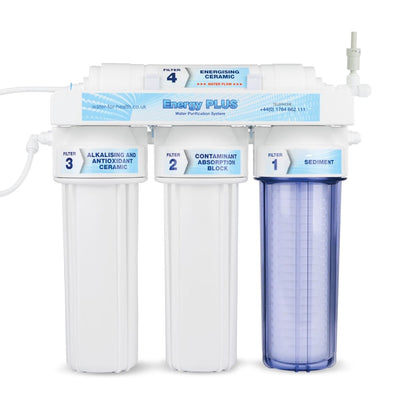
A whole house system is designed to remove heavy metals and other pollutants from your supply, along with the majority of these unwanted chemicals, before the water is used anywhere in your home. Some systems go further than simple filtration.
Ours, for example, also works to improve the structure of the water, which is something that gets overlooked by many filtration companies, but plays a part in making water feel more natural to the body and greatly improving water absorption.
It's worth noting that a whole house filter is not the same thing as a water softener. A softener deals with the minerals that cause limescale, while a whole house filter deals with contaminants. The two can be installed alongside each other if needed, although we take the view that calcium and magnesium minerals are not pollutants and are potentially beneficial.
Here's how the main options compare at a glance:
|
Filter type |
Best for |
What it won't do |
|
Filter jug |
Low-cost improvement to drinking water |
Small quantities only; won't remove fluoride; no benefit for showers, baths or appliances |
|
Under-sink filter |
Better drinking and cooking water at one tap |
Only treats a single outlet; the rest of the home stays unfiltered |
|
Shower filter |
Reducing chlorine in shower water |
Doesn't treat drinking water or the wider home |
|
Whole house filter |
Filtered water from every tap, shower and appliance |
Requires professional installation; drinking-focused extras (e.g. alkaline water) need an under-sink unit alongside |
Why Do Some UK Homes Choose Whole House Filtration?
Most people in the UK have access to mains water, but that doesn't mean it's free from concern. There are five main issues that lead households to look into whole house filtration.
The first is chemical additives. Tap water is treated to remove most contaminants, but that process introduces its own chemicals, including aluminium, used to remove sediment, and chlorine, used for disinfection. Long term exposure to chlorine has been linked to some respiratory problems. It is not helpful for skin and hair.
The second is pharmaceutical residue. Many medicines are not fully broken down by the body once taken, and traditional wastewater treatment is not equipped to remove them fully, so trace amounts can find their way back into the water supply and may affect hormone function.
The third is fluoride, which is added to approximately 20% of UK tap water for dental health. The practice is increasingly questioned, with some studies suggesting that excessive fluoride exposure may affect IQ, brain health, bone health and contribute to fluorosis, a condition that affects tooth enamel.
The fourth is environmental pollutants. Modern farming relies heavily on pesticides, herbicides and fertilisers, which leach into the soil and eventually into groundwater and surface water.
The fifth is heavy metals, which can enter water naturally, through industrial waste, farming, or corroding old pipework. Lead is poisonous to almost every organ in the body, while exposure to mercury can affect the nervous system, and arsenic can cause long term harm to the skin, lungs and bladder.
Put together, these five issues are the primary reasons why UK households look beyond a single tap filter. However, there are also more recent concerns about the possibility of microplastic particles and PFAS (forever chemicals) being present. Whole house filtration deals with the water used for cooking, washing, bathing and drinking, not only what comes from the kitchen tap.
What Can Be Found in Tap Water?
UK tap water is treated and considered safe to drink because it generally complies with acceptable standards for the removal of the majority of pollutants. However, what is not known is the cumulative effect of the combination of many pollutants that are all individually within acceptable concentrations.
Chlorine is added during treatment to kill bacteria and keep the water safe as it travels through the network. In many areas the water companies are adding chloramines (combinations of chlorine and ammonia) because their effect persists longer in the pipework than chlorine. Fluoride is also routinely added in many areas for dental health. Not every UK supplier fluoridates their water, although the government would like to spread its use throughout the country.
Heavy metals can be present too, often picked up from old pipework rather than the treatment process itself. Lead is the main concern here, particularly in older properties where original pipes are still in use. However, heavy metal contamination is not as common as it was in years past.
Pesticides, herbicides and fertiliser residues can also make their way into the supply, having leached from agricultural land into groundwater and rivers over time. There is particular concern regarding glyphosate (Roundup) because of its extensive use and concerns for its impact as a potential carcinogen. Pharmaceutical residues can be present in trace amounts as well, having passed through wastewater treatment without being fully removed.
Microplastics are a newer concern, with tiny plastic particles increasingly turning up in water supplies and raising questions about long term effects on health. The majority of microplastic fibres are believed to be greater in size than 5 microns.
None of this means UK tap water is unsafe in the way it might be in other parts of the world. But it does explain why some households want an extra layer of filtration before that water reaches their glass, shower or washing machine.
How Does a Whole House Water Filter Work?
As our guide to whole house water filters explains, a whole house water filter is fitted at the point where mains water enters your home, so every tap and appliance receives treated water rather than just one.
There are many approaches used in whole house water treatment systems. Our system uses a specialised carbon block filter to do the bulk of the work, removing a wide range of contaminants, from heavy metals to pesticide residue and microplastics larger than two microns. It also removes chlorine, chloramines and fluoride.
Activated carbon works to absorb and adsorb contaminants with a vast surface area. As water passes through it, chlorine, organic chemicals and many other unwanted substances are drawn out and trapped within the filter media. However, it has limitations with chloramines, fluoride and complex organic compounds.
Some systems, including ours, go a step further by adding bioceramic mineral crystals to the filtration process. These help to improve the structure of the filtered water, something that's often overlooked by other filtration companies. Improved water structure is a great aid to better water absorption, resulting in improved hydration alongside the removal of contaminants. Bioceramic minerals and crystals use combinations of select natural minerals which positively improve water structure.
In the UK most water companies adjust the pH of water to approximately 7.5 (slightly alkaline). It is set at that level to reduce the potential of corrosion in the water distribution network.
It's worth bearing in mind that we consider the optimum water used for washing and bathing to be fairly neutral in pH. However, if a household also wants alkaline antioxidant water for drinking, cooking or washing fruit and vegetables, an additional filter under the kitchen sink is usually recommended alongside the whole house system, rather than trying to achieve everything from one unit.
Can a Whole House Water Filter Remove Chlorine?
Yes. Chlorine is one of the substances a whole house water filter is very effective at dealing with. It's added to mains water during treatment to keep it safe as it travels through the network, but most households would rather it wasn't still present by the time it reaches the tap. The activated carbon stage in a whole house system removes chlorine from the water as it passes through, which is also why filtered water tends to taste and smell noticeably better.
Can a Whole House Water Filter Remove Fluoride?
Fluoride is a little more difficult to remove than chlorine, and most filters do not deal with it. Standard carbon filtration, the kind found in most jug filters, does very little to remove it, so it takes a system specifically designed for the job to remove fluoride effectively.
This matters to a fair number of households. Long term fluoride intake, even at legally permitted levels, has been linked in various studies to weaker bones, reduced thyroid function and lower bone density. Most of Europe, including Germany, France and Italy, has ruled out artificial fluoridation of tap water altogether.
It does still take place in parts of Britain, particularly in the Midlands and North East England. Although fluoride can also occur naturally in water in other parts of the country, natural fluoride is in a very different form from what is dosed into treatment works.
A whole house system built specifically to target fluoride, alongside chlorine and heavy metals, can achieve over 95% removal before the water reaches any tap in the home. So while chlorine removal is fairly standard across most whole house filters, fluoride removal is not guaranteed by every system. It's worth checking specifically what a filter is rated to remove before assuming it covers both.
Can a Whole House Water Filter Remove Heavy Metals?
Yes, and this is one of the main reasons households choose whole house filtration in the first place. Heavy metals can occur naturally in underground soil and rock, but they also reach the water supply through ageing pipework, industrial seepage and farming run-off.
Lead is the metal most people are familiar with. It isn't normally present at source, but it can enter the water through plumbing, particularly in older properties that still have original lead pipework. It's harmful to almost every organ in the body and has been linked to stunted growth and developmental issues, especially in children.
Copper can also find its way into water through plumbing. It tends to leave a metallic taste and can cause blue staining on sinks and sanitary fittings, a sign that it's present in higher amounts than it should be. Cadmium is another concern, generally linked to industrial effluents and certain fertilisers, and exposure over time has been associated with kidney and bone problems.
Arsenic occurs naturally in the earth's crust but can also enter water through industrial contamination, and long term exposure has been linked to skin, lung and bladder problems. Mercury, meanwhile, is mainly associated with industrial effluents and heavy industry, and can affect the nervous system at higher levels of exposure.
If any of these heavy metals are present in mains water it is likely at very low levels. A whole house filter is designed to remove a high percentage of these metals before the water reaches any tap, shower or appliance in the home, typically using a specialised carbon block filter that's also effective against pesticide residues and microplastics.
Because heavy metals often enter the water supply locally, sometimes from pipework specific to your own home or street rather than the wider mains network, this is one area where filtration can make a genuinely measurable difference, not just improve taste or smell.
Where Should a Whole House Water Filter Be Installed?
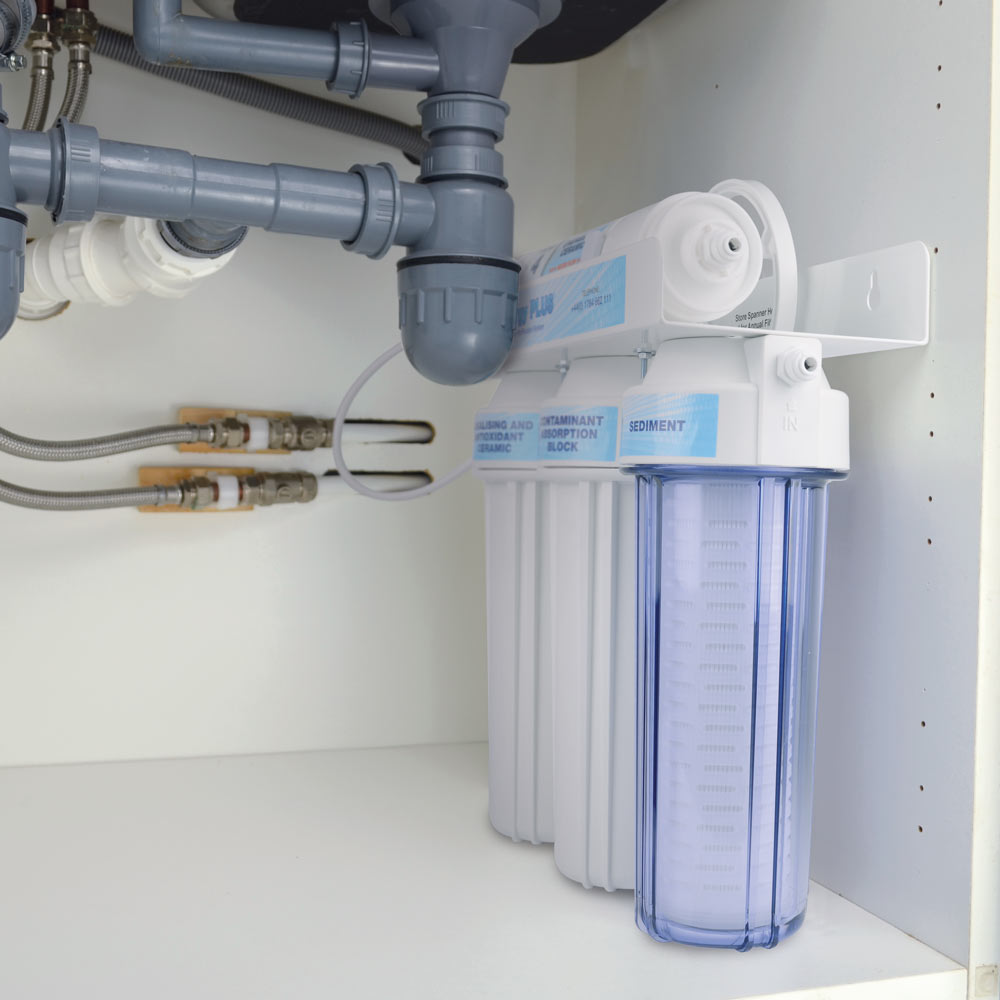
A whole house water filter is fitted at the point where mains water enters the property, typically just after the stopcock, so that every tap and appliance in the home draws from filtered water rather than just one outlet.
We'd always recommend having the system installed by a qualified plumber — that way you can be confident it's fitted correctly and won't cause any issues with water pressure or flow further down the line. Once it's installed, it's normal to run the water for around five minutes before using it, to clear any carbon dust particles from the new filter media.
If you're also after alkaline, antioxidant water specifically for drinking, cooking or washing fruit and vegetables, it's worth knowing that a whole house system on its own won't do this. We treat general household water, the kind used for washing and bathing, as fairly neutral in pH, so for alkaline water you'd need an additional filter fitted under the kitchen sink alongside the whole house unit.
How Often Do Whole House Water Filters Need Replacing?
Most whole house water filters need their cartridges replaced annually. This keeps the system working as it should, since filter media has a limited capacity for trapping contaminants and performance can drop if the filters are not changed.
You can usually replace the filters yourself once the system is installed, without needing to call out a plumber again. Budgeting around £300 or less a year for replacement filters is a reasonable expectation for a small system, though this can vary depending on the system you have fitted.
It's worth treating filter changes as a routine bit of home maintenance, much like changing a boiler filter or servicing an appliance. Leaving filters in place for too long won't damage the system, but it will reduce how effectively it's removing contaminants, so it's not something to put off once the recommended period has passed.
Is a Whole House Water Filter Worth It?
A whole house water filter system costs less than many people expect. A small system can be fitted for under £450, though you'll need to factor in the cost of a plumber for installation, and around £300 or less a year for replacement filters. For a larger property, the initial system cost can rise to around £700, with the main outlay being the installation itself rather than ongoing upkeep.
If you value the quality of your family's water and can afford to invest in a whole house system, it's generally a worthwhile one. It's not just about drinking water either, every tap and appliance in the home benefits, from the shower to the washing machine.
If the full cost isn't something you can stretch to right now, it doesn't have to be all or nothing. Starting with an alkaline water filter jug or a shower filter is a reasonable middle step, giving you cleaner drinking and shower water while you plan for the larger system.
For most households who can manage the investment, a whole house water filter is a sound long term choice. It deals with the water you use every day, not just the water you happen to think about.
Is It Important to Improve Water Structure in Addition to Water Filtration?
Recent advances in the understanding of the benefits to human health in consuming water that has good structure are showing exciting potential. In our view it is important not only to drink clean water but water with good structure which is health supporting. When water is structured it will be better absorbed in the body. It is often referred to by other names such as EZ water (exclusion zone water) or hexagonal water.
The whole concept of water structure was once viewed as absurd by the scientific community but more research is showing its fascinating potential to improve wellbeing. There are numerous ways to improve water structure such as vortexing, using special minerals and crystals, through light and through magnetic fields.
Vortexing can commonly be observed in nature and is probably the current best option to improve the structure of water. The whole concept is to put more life back into water that has been subject to very unnatural processing before it gets to your home.
Systems are available to be used as stand-alone units or combined with whole house filtration to give a more holistic approach to the treatment of water for use in the home.
Explore Whole House Water Filters
If you'd like to find out more about how a whole house water filter could work for your home, use this whole house water filter guide alongside our range of systems below, or get in touch with our team if you'd like advice on the right option for your property.
[Product links and related articles to be added during the linking pass]
Frequently Asked Questions
Does a whole house water filter reduce water pressure?
A correctly sized and properly installed system should have no noticeable effect on your water pressure or flow. This is one of the reasons we recommend installation by a qualified plumber, who can match the system to your property's pipework and pressure before fitting it.
Is a whole house water filter the same as a water softener?
No. A softener deals with the calcium and magnesium minerals that cause limescale, while a whole house filter removes contaminants such as chlorine, fluoride, heavy metals and pesticide residues. The two can be installed alongside each other, although we take the view that calcium and magnesium are not pollutants and are potentially beneficial.
Can I install a whole house water filter myself?
We'd always recommend having the initial installation carried out by a qualified plumber, so you can be confident the system is fitted correctly and won't affect pressure or flow. Once it's in place, though, routine filter changes are straightforward and most households handle them without calling a plumber back out.
How long does a whole house water filter system last?
The housing and system itself is a long-term installation that should last many years. It's the filter cartridges inside that need replacing, typically once a year, to keep the system removing contaminants effectively.
Does a whole house water filter remove limescale?
Not on its own — limescale is caused by naturally occurring calcium and magnesium, which a whole house filter is not designed to remove. If limescale is a particular problem in your area, a softening or conditioning solution can be fitted alongside the filter, though we'd suggest weighing this up carefully, as these minerals also have potential benefits.